
Unlock Precision Navigation: Micoair MG-F10 GNSS Module Review
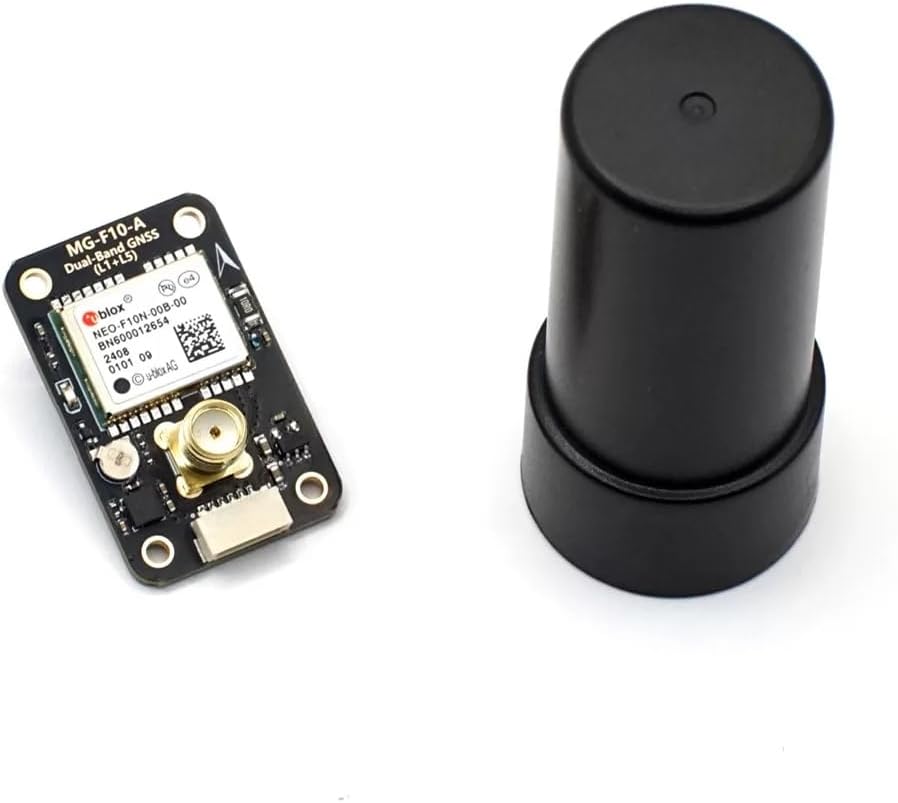
In the evolving world of drones and robotics, precision navigation is critical to achieving reliable performance and advanced functionalities. The Micoair MG-F10 Dual Band GNSS Module (L1+L5) offers a promising solution designed for enthusiasts and developers seeking enhanced location accuracy. Featuring multi-constellation support alongside built-in compass technology, this module aims to elevate navigation capabilities for PX4 and Ardupilot-based systems. In this review, we delve into the key features, benefits, and ideal use cases of the Micoair MG-F10 to help you decide if it’s the right fit for your project.
Key Features
Dual Band GNSS (L1 + L5)
The Micoair MG-F10 stands out with its dual-band GNSS technology which leverages both L1 and L5 signals. This dual-frequency support improves the resistance to signal interference and multipath errors, yielding more accurate and stable positioning data. For applications like drone navigation, where precision matters, this results in smoother flight paths and better waypoint tracking.
Multi-Constellation Capability
Equipped to receive signals from multiple satellite constellations—including GPS, GLONASS, Galileo, and BeiDou—the module enhances satellite visibility and availability. This wide compatibility ensures robust positioning even in challenging environments like urban canyons or dense forests, bolstering reliability in diverse scenarios.
Explore the Micoair MG-F10 Now!
Integrated IST8310 Compass
The inclusion of the IST8310 electronic compass allows for accurate heading information. This sensor integration is vital for autonomous navigation where orientation data complements GPS positioning, improving route planning and stabilization for drones and robotic systems.
Quad Helix Antenna for Optimized Signal Reception
The module utilizes a quad helix antenna designed to enhance signal reception sensitivity. Compared to standard patch antennas, this type offers better gain and stability, contributing to more consistent satellite lock and fewer dropouts during operation.
PX4 and Ardupilot Compatibility
Supporting popular autopilot software like PX4 and Ardupilot, the Micoair MG-F10 fits seamlessly into a wide range of open-source flight controllers and robotic platforms. This versatility makes it accessible for hobbyists, researchers, and developers who rely on these ecosystems.
Discover Dual Band GNSS Features
Pros & Cons
Since the Micoair MG-F10 Dual Band GNSS Module has not yet gathered user reviews on Amazon, the assessment is based on its specifications and typical performance characteristics of similar modules.
Get Your GNSS Module for Drones!
Pros:
- Enhanced Accuracy: Dual-band signals reduce errors caused by ionospheric delays and multipath effects.
- Versatile Multi-Constellation Support: Enables operation in varied geographic and environmental conditions.
- Compact Integrated Compass: Provides crucial heading data without requiring an external sensor.
- Strong Antenna Design: The quad helix antenna design improves signal stability, critical for drones in motion.
- Open Ecosystem Friendly: Out-of-the-box compatibility with PX4 and Ardupilot simplifies integration.
Cons:
- Price Point: At around $69, it may be pricier than some single-band GNSS modules, which could be a consideration for budget-conscious users.
- Limited Review Data: Lack of customer reviews means less insight into real-world durability and performance nuances.
- Technical Integration Required: Best suited for users comfortable with configuring GNSS modules and autopilot software.
Who Is It For?
The Micoair MG-F10 Dual Band GNSS Module is ideal for drone developers, robotics engineers, and advanced hobbyists looking to upgrade their navigation hardware. It fits users requiring precision and reliability in GPS data, such as those building autonomous drones, mapping UAVs, or outdoor robotic systems. Its compatibility with PX4 and Ardupilot also makes it a good choice for users entrenched within open-source flight control environments. Beginners without experience in hardware integration might find the setup challenging without external technical assistance.
Final Thoughts
The Micoair MG-F10 GNSS Module presents a compelling package for anyone focusing on precision navigation in drones and robotic applications. Its dual-band functionality combined with a multi-constellation receiver, integrated compass, and robust antenna design is well-aligned with the demands of modern autonomous systems. While it sits at a moderate price point and lacks user feedback, its technical capabilities suggest reliable and enhanced positioning performance compared to single-band alternatives. For projects requiring dependable and accurate navigation data, the MG-F10 is a sophisticated choice worth considering.
Consumer Ability participates in the Amazon Associates Program and earns from qualifying purchases.